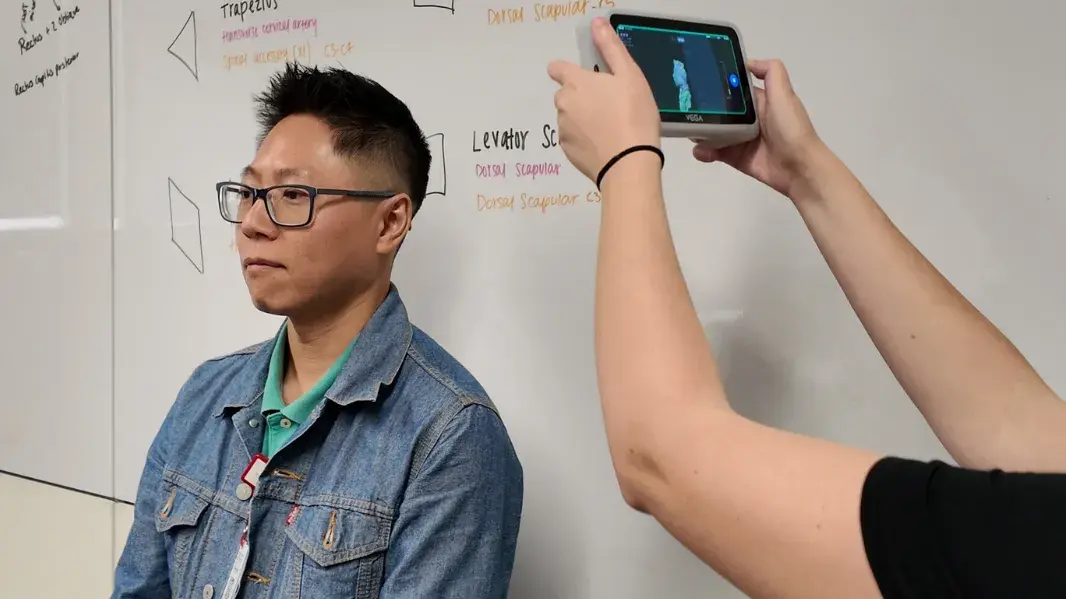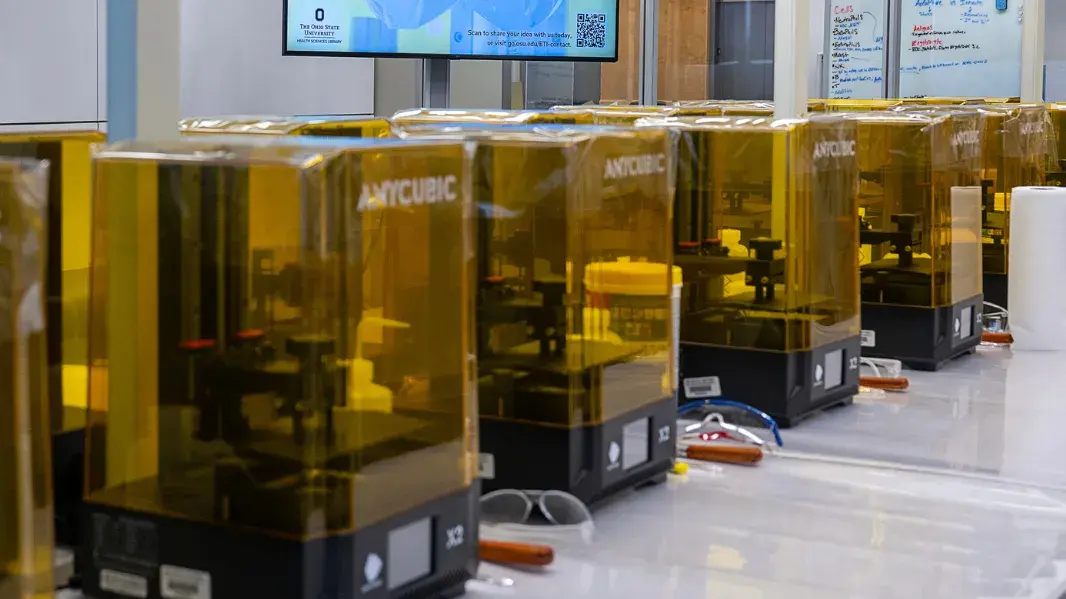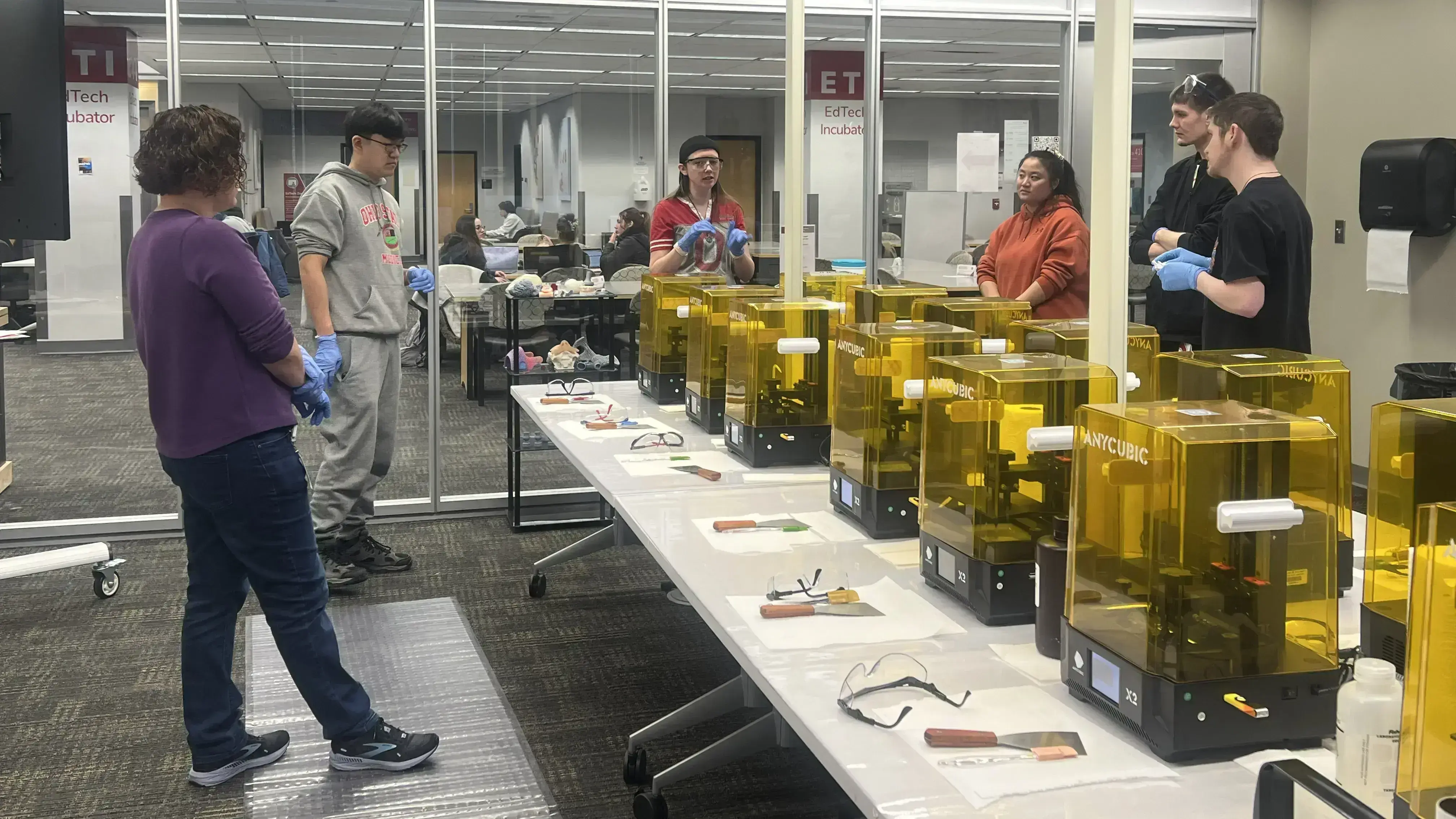
Housed within the Health Sciences Library (HSL), the EdTech Incubator (ETI) 3D Printing Zone is well‑known as a resource for health sciences learners. But its reach expands beyond the College of Medicine. This space has seen a rise in usage by learners in other fields, including engineering and architecture.
The ETI’s 3D printers are not limited to producing anatomical models and surgical planning models, contrary to what one might initially think from its HSL location. As word has spread about the lab’s high-performing equipment and staff expertise, more faculty and learners incorporated this service into their coursework and research.
“We still support a high volume of print jobs for our medical students,” ETI Coordinator Mo Duncan shared. “But now, the engineering, dentistry and architecture departments have become the top three users of the 3D Printing Zone. Their projects are creative and often very complex. That’s exactly what this space was built to help with.”
Engineering students frequently use the space to prototype mechanical components, test product designs or generate models for capstone projects. Dental students rely on the printers for highly detailed anatomical models, custom tools and practice materials. Architecture students bring a different kind of challenge — conceptual models and intricate structural designs that require a quality 3D printer.
Mo says the trend reflects the university’s broader culture of shared resources and cross‑disciplinary learning.
“Having a centralized printing zone means students bring us ideas we never would have expected,” she said. “We love being part of that creative process.”
The 3D Printing Zone expects demand to keep rising. Mo is exploring ways to expand training so that more students can learn how digital fabrication can enhance their work — no matter their area of study.